
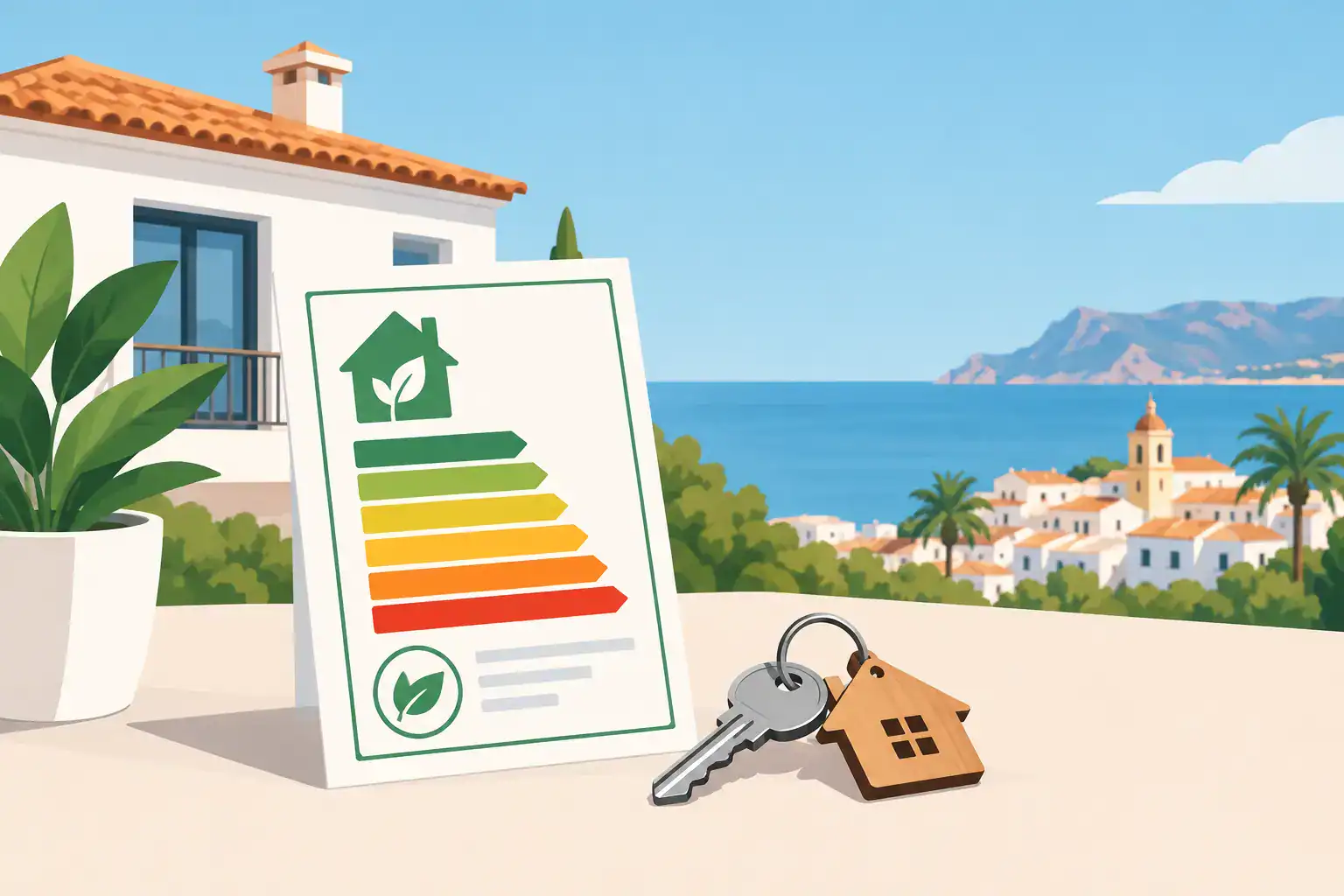
A sun-filled Valencia flat can look perfect at 11am and feel very different after a humid August night or a cold January spell. That is why buyers often ask: do energy certificates matter in Spain? The short answer is yes, but not in isolation.
Spain’s energy certificate gives you a useful first indication of a home’s likely energy performance. It can reveal whether a low asking price may be followed by high electricity bills, limited comfort or expensive improvements. It does not, however, replace a proper technical, legal and urban-planning review. For an international buyer, the value lies in knowing what the document can tell you, what it cannot, and when to investigate further.
What Spain’s energy certificate actually shows
The Spanish energy performance certificate, or certificado de eficiencia energética, rates a property from A to G. An A-rated home is the most efficient; a G-rated property is the least. The assessment estimates energy consumption and carbon emissions under standardised assumptions, taking account of factors such as insulation, windows, orientation, heating, hot water and cooling systems.
In most sales, the seller must hold a valid certificate and provide it to the buyer. The rating should also appear in property advertising. Certificates are generally valid for up to ten years, provided no material alterations have changed the property’s energy performance.
This requirement matters because it creates a baseline. A buyer can compare two outwardly similar homes and identify a potential difference in running costs and comfort before making an offer. But the certificate is not a guarantee of your future bills. Your actual consumption will depend on how you use the home, how many people occupy it, electricity tariffs, outdoor temperatures and whether systems are maintained properly.
Do energy certificates matter in Spain for buyers?
They matter most when the certificate confirms concerns already visible during a viewing. A G rating in an older city-centre flat with original single-glazed windows, no apparent insulation and electric radiators is not surprising. It is a signal to ask sensible questions about summer heat, winter damp, noise, air conditioning and the likely cost of improvement.
Equally, a high rating deserves some scrutiny. An A or B rating may reflect genuinely excellent construction, high-quality glazing, aerothermal heating, solar generation or strong insulation. It may also be influenced by assumptions and installed systems that are no longer functioning as intended. Ask to see supporting documents, recent utility bills where available, maintenance records and details of any solar or climate-control equipment.
For buyers weighing an older resale home against a new build, the rating often has greater practical significance. New developments in Valencia and the Costa Blanca tend to meet more demanding construction standards and commonly achieve stronger ratings. That can support lower consumption and better year-round comfort, although it may come with a higher purchase price and, in some developments, higher community fees.
The right decision is rarely as simple as choosing the highest letter. A beautifully located older property may still be the better purchase if its price, layout, condition and improvement potential make sense. The key is to include the cost and disruption of energy upgrades in your financial planning rather than treating them as an afterthought.
Why a poor rating can affect more than bills
Energy performance is increasingly part of a property’s marketability. Buyers are more alert to cooling costs in hot climates, and European policy continues to push housing towards lower emissions. A poorly performing home is not automatically a bad investment, but it may face a narrower pool of future buyers unless it can be improved.
Comfort is often the immediate issue. Valencia’s climate is mild by northern European standards, yet homes can become uncomfortably hot in summer and surprisingly cold indoors during winter. Many traditional properties were built before modern insulation standards. Thick walls and shutters can help, but they are not a substitute for a well-designed thermal envelope, efficient systems and effective ventilation.
There is also a negotiation angle. If the certificate, viewing and technical inspection all point to inadequate windows, ageing air conditioning or poor insulation, you have evidence for a more realistic offer. The strongest negotiation is specific: not “the rating is low”, but “the property requires a new climate system, window upgrades and likely electrical work, with a clear cost implication”.
The limits of the certificate
An energy certificate should never be mistaken for a building survey. It does not confirm that a roof is watertight, an air-conditioning unit works, the electrical installation is safe or renovations were legal. It does not identify structural defects, check community debts or confirm whether a terrace enclosure has the required permission.
It also may not capture the full reality of an individual flat within a larger building. A top-floor home under an uninsulated roof can perform very differently from a mid-floor flat with the same nominal rating. West-facing glazing, exposure to wind, shaded streets and the condition of neighbouring properties all influence daily comfort.
This is why buyers should view the certificate as one document within a wider due-diligence file. The property’s nota simple, cadastral information, planning position, community documentation, occupancy status and physical condition must all be checked independently. No single paper gives complete protection in a Spanish purchase.
Questions worth asking before you commit
Once you receive the certificate, focus on the practical details behind the rating. Ask when it was issued and whether it has been properly registered. Establish whether any refurbishments were carried out after the assessment, particularly new windows, insulation, solar panels or heating and cooling equipment.
For homes with a lower rating, ask how the seller has used the property through summer and winter. Request available electricity bills, while recognising that bills reflect personal habits rather than a fixed cost forecast. During the viewing, pay attention to condensation, signs of damp, the age and placement of air-conditioning units, the type of glazing and whether shutters close properly.
In a community building, investigate which improvements are possible privately and which require community approval. Replacing internal equipment may be straightforward. Altering façades, installing external units, fitting solar panels or changing shared systems can involve community rules, municipal requirements and practical limitations. A technically sensible upgrade is not always easy to carry out.
How to use the rating in your purchase strategy
Treat the energy certificate as an early warning system, not a pass-or-fail test. If you love the property and the rating is weak, obtain realistic advice on improvement options before removing conditions or committing significant funds. Some upgrades offer clear benefits, while others are expensive for a modest return in an individual flat.
Prioritise measures that improve both comfort and everyday use. Effective shading, efficient air conditioning with heat-pump capability, better glazing and draught reduction can make a meaningful difference in Valencia. Major insulation works may be more complicated in an existing building and need a longer-term view.
For a new build, compare the promised rating with the specifications in the purchase contract. Confirm the stated systems, insulation, glazing and solar provisions, rather than relying solely on brochure language. Before completion, ensure the final documentation matches what was agreed.
At HelloHome Valencia, we see the best outcomes when buyers assess energy performance alongside the property’s legal status, condition and long-term purpose. A holiday home used occasionally calls for a different calculation from a primary residence, rental investment or retirement move.
The certificate may be only one page in a much larger purchase file, but it can prompt the questions that protect your comfort, budget and future resale position. Use it early, challenge anything unclear, and let the answers shape a decision you can feel confident living with.