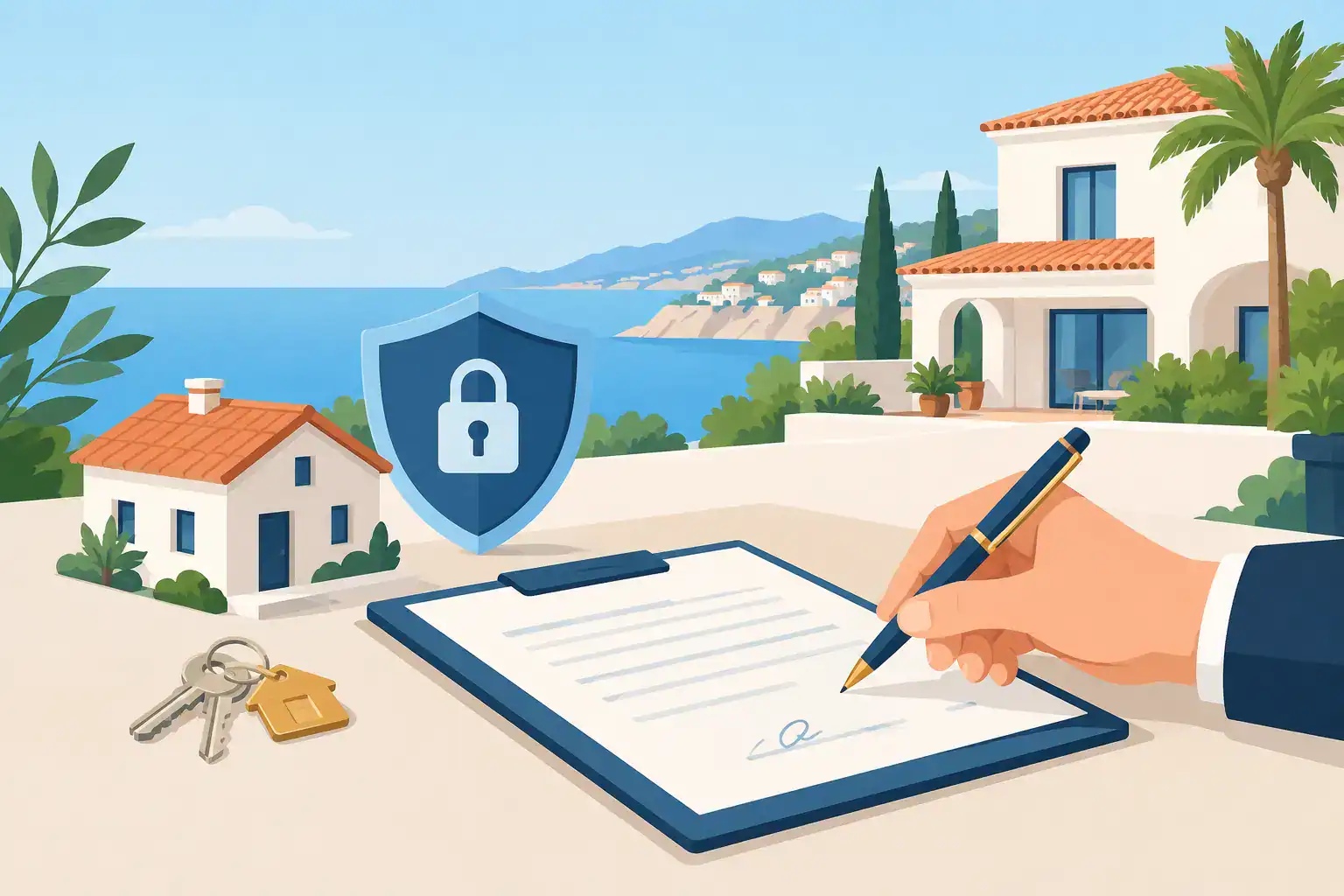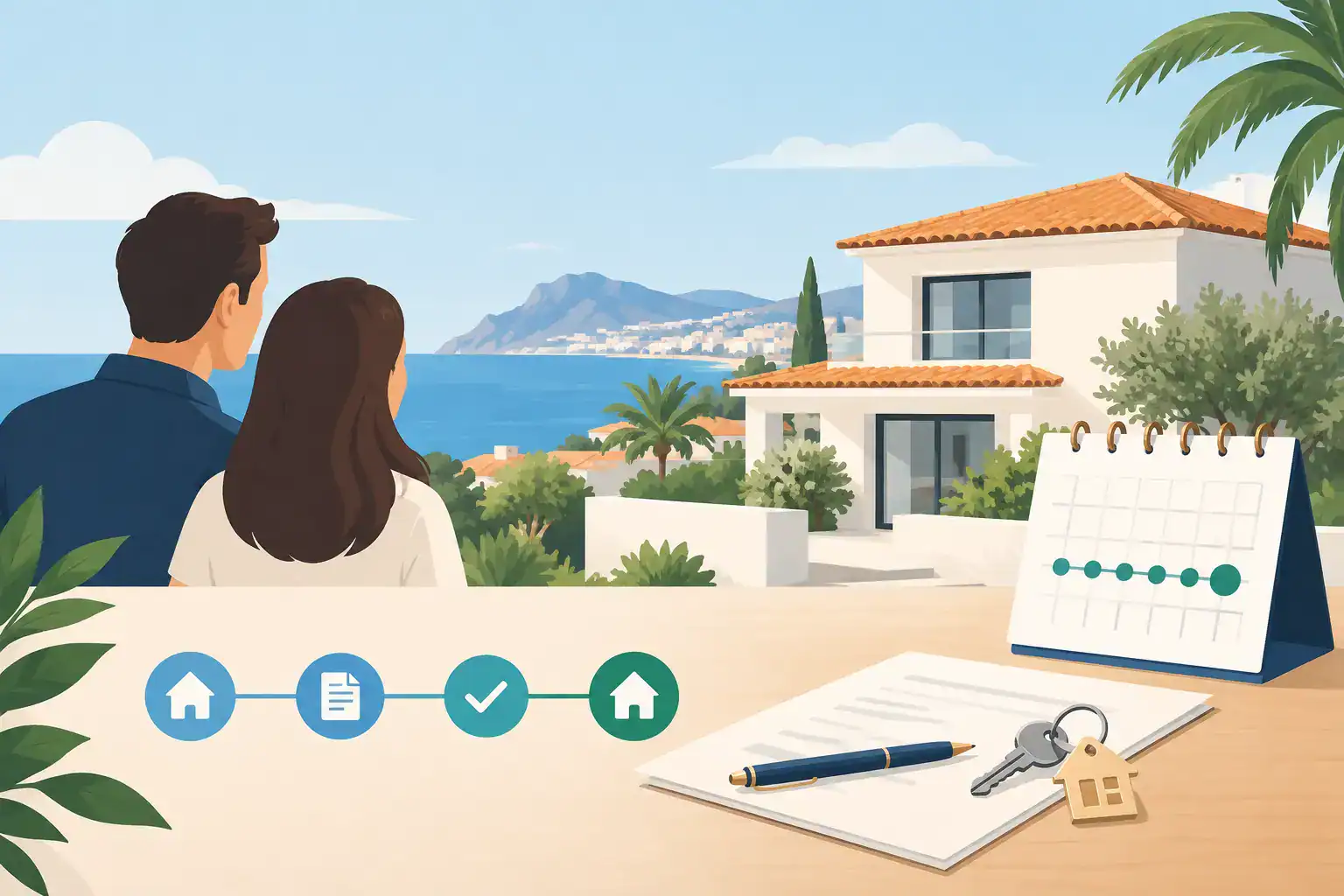
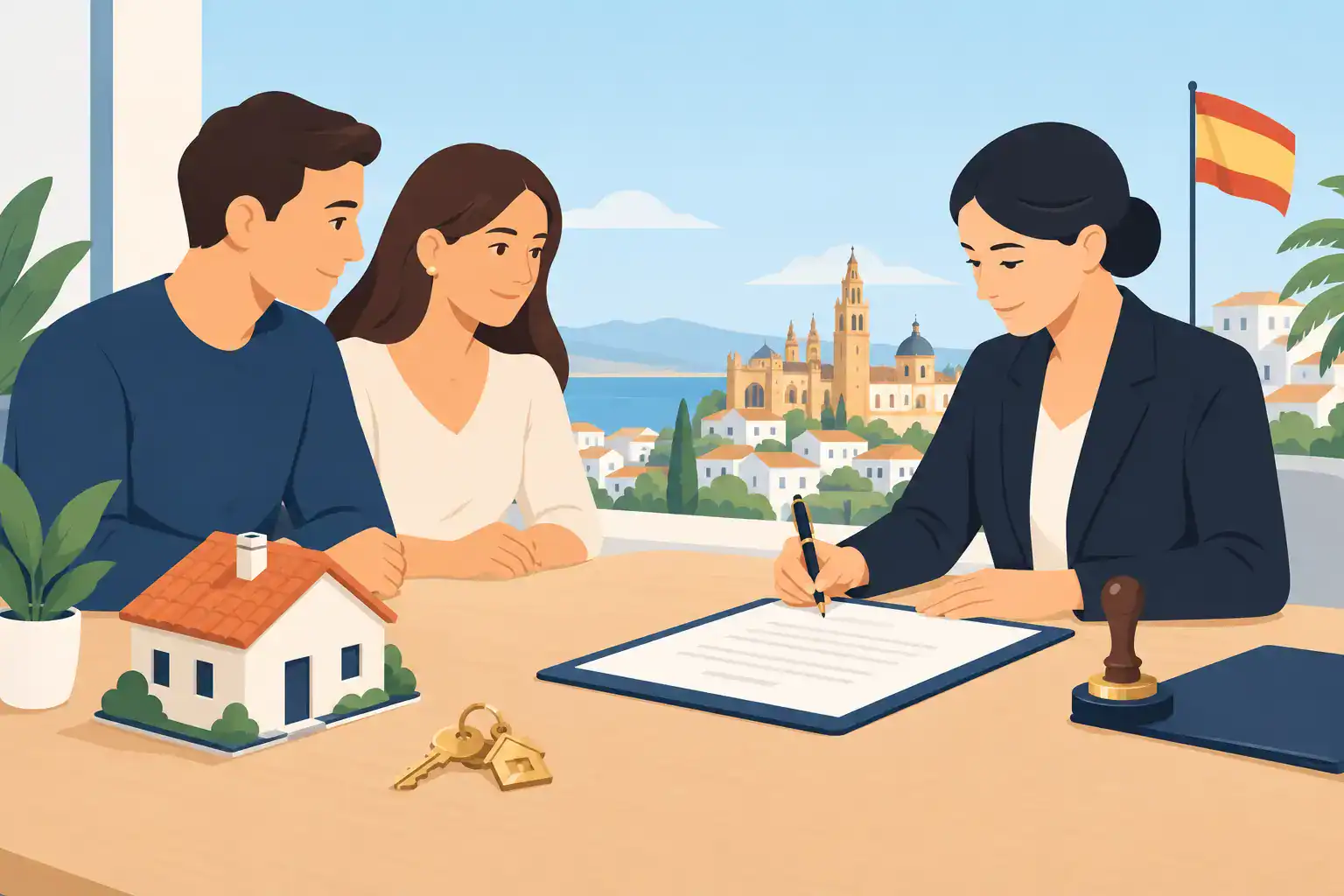
Buying a home in Valencia should end with confidence, not a rushed signature in an unfamiliar office. This guide to notary in Spain explains what the notary does, what they do not do, and how to arrive at completion knowing the property and paperwork have been properly checked.
For international buyers, the notary is one of the most visible parts of the Spanish purchase process. You will sign the public deed, known as the escritura de compraventa, transfer the final funds and usually receive the keys. It is a major legal milestone, but it is not the point at which due diligence should begin.
What does a notary do in Spain?
A Spanish notary is an independent public official who gives formal legal effect to certain transactions, including property sales, mortgages, inheritances and powers of attorney. In a property purchase, their role is to prepare and authorise the public deed of sale, verify the identity and legal capacity of those signing, and ensure the transaction meets key legal formalities.
The notary will normally confirm who owns the property, review information from the Land Registry, identify registered charges and check whether there are any restrictions that should appear in the deed. They will also confirm payment arrangements, include legally required statements and explain the principal terms before the parties sign.
This protection matters. A sale cannot be registered in the buyer’s name without a notarised deed. The notary also sends the deed electronically to the Land Registry shortly after signing, which helps protect the buyer’s priority while formal registration is completed.
However, a notary is neutral. They do not act for the buyer, seller or estate agent. They cannot negotiate the price, advise whether a building has planning issues, assess whether a home is fairly valued, or carry out the detailed legal and technical investigation that a prudent buyer needs.
Notary in Spain: what they will not check for you
A common and costly misconception is that signing before a notary means every possible risk has been cleared. It does not. The notary’s checks are essential, but their remit is defined and they work with the documents presented to them.
Before completion, your lawyer and buyer-side adviser should investigate matters that can affect your ownership, use of the home and future costs. This may include planning and building compliance, the first occupancy licence where relevant, community of owners’ debts, unpaid local taxes, rental arrangements, protected-tenancy issues, boundaries, extensions and the legal status of storage rooms, terraces or parking spaces.
This is particularly relevant in Valencia and on the Costa Blanca, where an attractive terrace, enclosed balcony or converted basement may not always match the registered description. New-build purchases require their own scrutiny too, including developer guarantees for stage payments, building insurance and the terms of the delivery process.
The right question is not, “Will the notary protect me?” It is, “Have the risks been identified and resolved before the notary appointment?” A well-managed completion is usually calm because the difficult questions were dealt with weeks earlier.
The documents needed before completion
The exact paperwork depends on the property and the buyer’s circumstances, but the notary will need enough information to identify all parties and document the transaction correctly. International buyers will generally need a valid passport and an NIE number, the Spanish foreigner identification number required for property purchases and tax matters.
If you are buying through a company, the notary will need corporate documents and evidence that the person signing has authority to do so. If one buyer cannot attend, a properly drafted power of attorney may allow a trusted representative to sign. It should be prepared carefully, especially when signed outside Spain, as legalisation or an apostille and a sworn translation may be required.
The seller must provide documents such as proof of title, an energy performance certificate and evidence relating to community charges. For homes with a mortgage, arrangements must be made to cancel the seller’s loan at or around completion. Your legal team should ensure that the cancellation is not simply promised, but documented and followed through at the Land Registry.
Spanish anti-money-laundering rules also mean buyers should be ready to show a clear source and route of funds. Keep bank statements, proof of savings, sale proceeds, inheritance documentation or other supporting evidence organised well in advance. A last-minute request from a bank or notary is much easier to handle when the paper trail is already clear.
What happens on the day of signing?
Completion usually takes place at the notary’s office. The parties, their representatives and, where relevant, bank representatives attend. If you do not speak Spanish fluently, arrange an interpreter or ensure that an authorised person can translate the deed and explanations properly. Do not treat this as a formality. You should understand the price, payment method, property description, charges and declarations you are signing.
Before the deed is signed, the notary reads or explains its key content. This is the moment to confirm practical points too: the keys, remotes, alarm codes, meter readings and any agreed furniture inventory. These details may sit outside the deed itself, but they can prevent an avoidable dispute later.
The balance is then paid using the agreed method. In Spain, this is often by banker’s cheque or a documented bank transfer, depending on the circumstances and the parties’ preferences. Cash payments are heavily restricted and are not a sensible solution for a property purchase.
Once everyone signs, you receive an authorised copy or proof of the deed and, normally, the keys. You have become the owner in the legal transaction, although the formal Land Registry entry will follow after taxes have been paid and the documentation has been processed.
Fees, taxes and the registration process
Notary fees are regulated by tariff and are generally linked to the value and complexity of the deed. They are not normally the largest cost in a Spanish purchase, but buyers should budget for notary fees, Land Registry fees, taxes and legal support as part of their total acquisition costs.
For resale homes in the Valencian Community, the buyer generally pays Transfer Tax. For new homes bought from a developer, VAT and stamp duty usually apply instead. Rates and rules can change, and individual circumstances matter, so obtain current advice before committing to a budget.
After signing, the deed must be submitted for tax settlement and registered at the Land Registry. The registry process confirms your ownership against third parties and records any mortgage or other registrable rights. Your adviser should obtain the final registered deed and check that the entry reflects the purchase correctly.
Keep in mind that completion costs are not the same as ongoing ownership costs. You will also need to plan for local property tax, community fees, insurance, utilities and, where applicable, non-resident income tax.
Can you choose the notary?
In many consumer property transactions, the buyer is entitled to choose the notary, although practical considerations can influence the decision. The seller, developer or mortgage lender may suggest a particular office, especially where signing logistics are complex. A recommendation is not necessarily a problem, but it should not replace independent legal advice.
A responsive notary office with experience of international buyers can make the signing process more efficient. Still, service and language support are only part of the decision. Your priority is to ensure that the deed accurately reflects a transaction that has already been investigated, negotiated and structured in your interests.
How to prepare with confidence
Do not wait for the notary appointment to review the escritura. Ask to see a draft in advance and compare it against your reservation contract, private purchase agreement and negotiated terms. Check the purchase price, cadastral and registry references, property description, fixtures included, payment figures and any mortgage cancellation wording.
If something differs from what you agreed, raise it before completion. You are not being difficult by asking questions. You are protecting a significant investment in a country whose legal system may be new to you.
At HelloHome Valencia, we see the notary appointment as the final handover point in a carefully protected buyer journey, not a substitute for it. With the right local representation, independent legal checks and clear communication before signing, you can collect the keys to your Spanish home with the certainty that matters most: knowing what you have bought and why it is safe to proceed.